OnDeck
Designing a real-time data system for slow-pitch softball
Overview
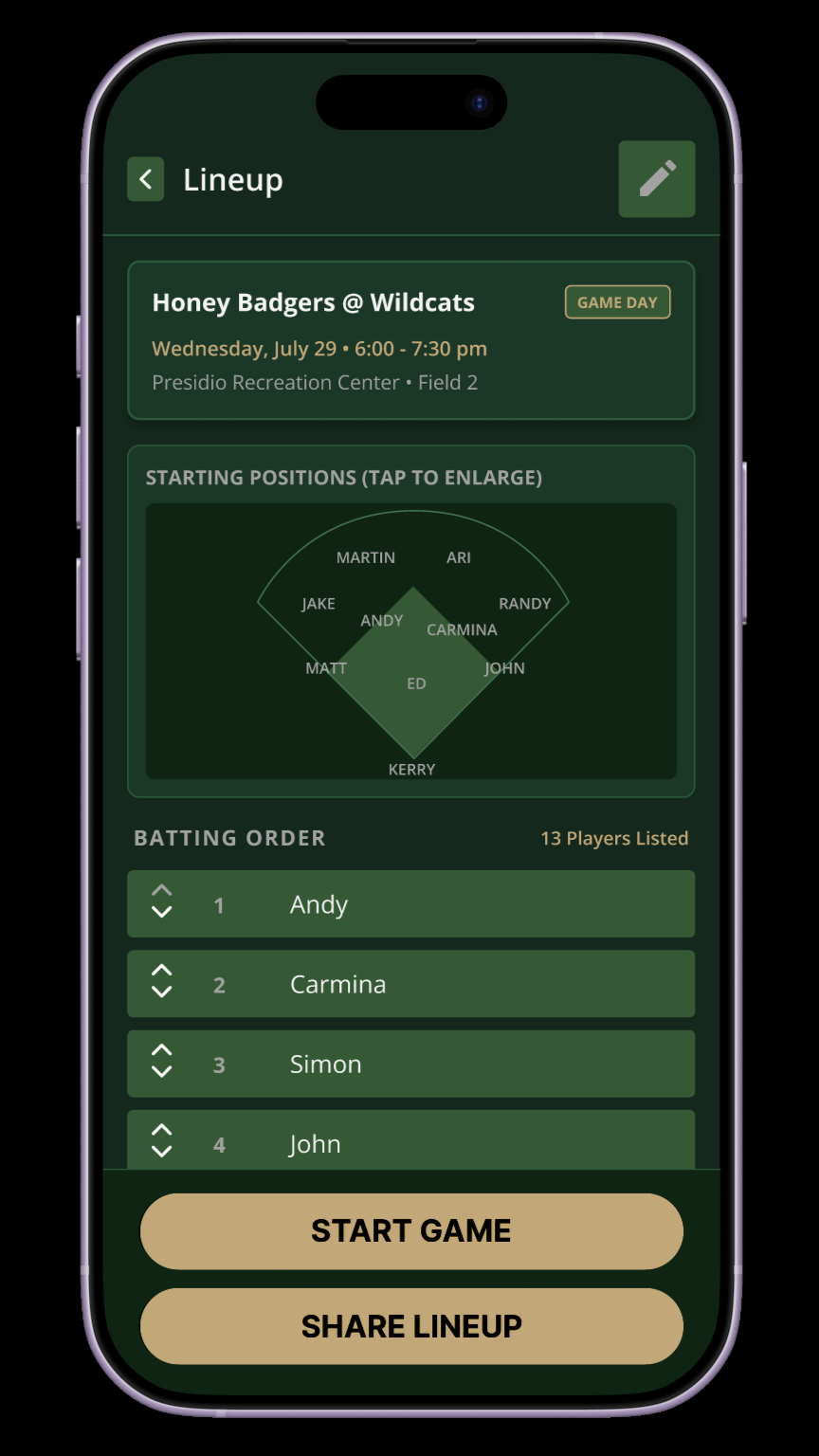
In my free time, I play a lot of slow-pitch softball. I love the nuances of different hitters and their tendencies and I wanted to find a way to use my team’s batting statistics to work in my team’s favor. I decided to explore and design a player management system that lets a user track position and lineup changes, and capture complex game events quickly, while transforming this into actionable suggestions and accurate statistics.
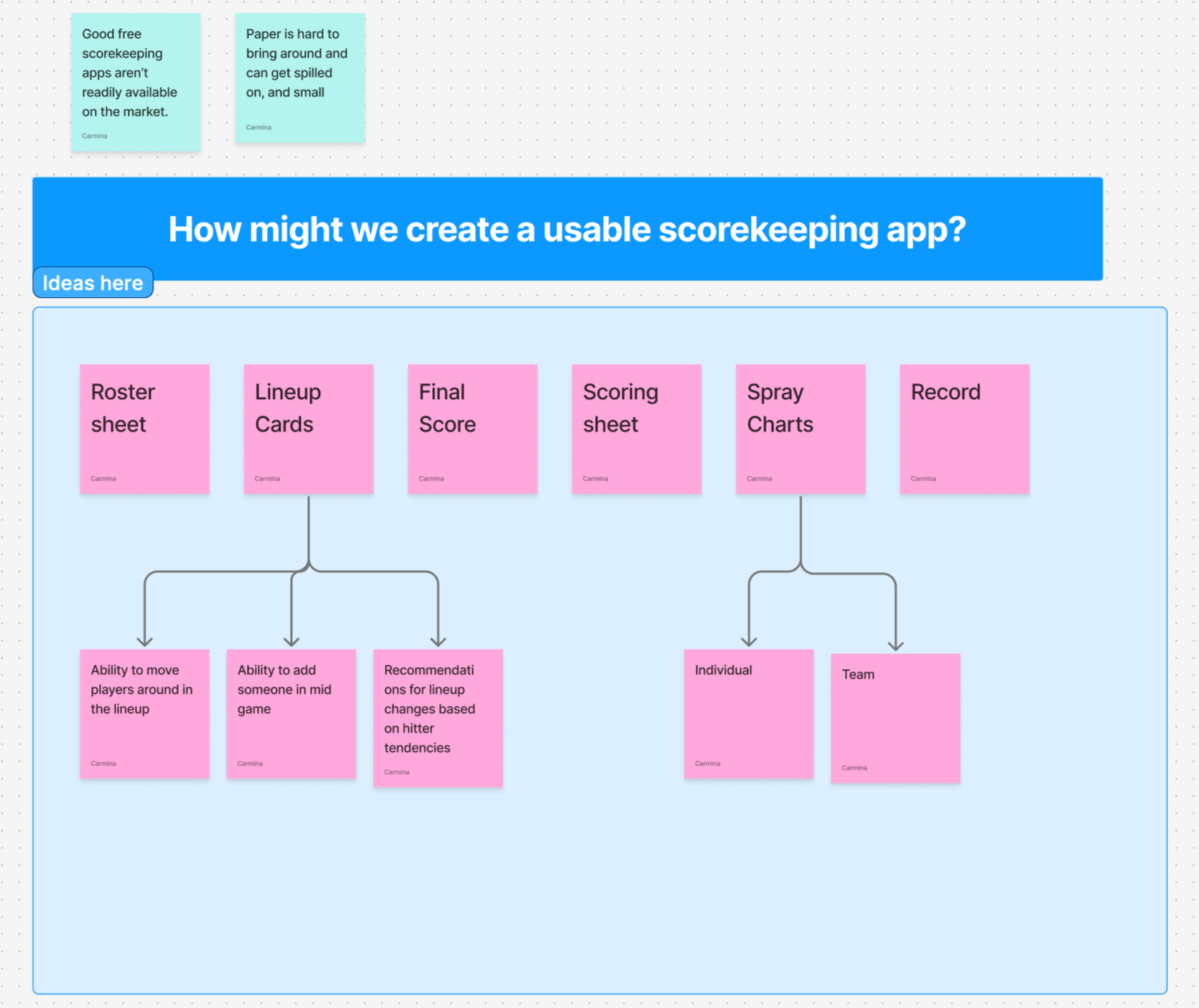
Traditional paper scorebooks are timeless, but inconvenient for those playing and scorekeeping at the same time (and not to mention, it can be messy in a beer league). Most good scorekeeping apps are hidden behind paywalls or don’t provide the flexibility for certain lineups. Because of this I’m looking to explore: How might we create a single, seamless experience that helps teams coordinate their players, manage their lineup, and accurately capture game data?
Role:
UI/UX Designer
Tools Used:
Figma
Duration:
July 2026 - Present
Scope
System Needs
(What does the system need to do?)
to ingest inputed game events and represent data accurately
to be editable in case of input error during or after a game
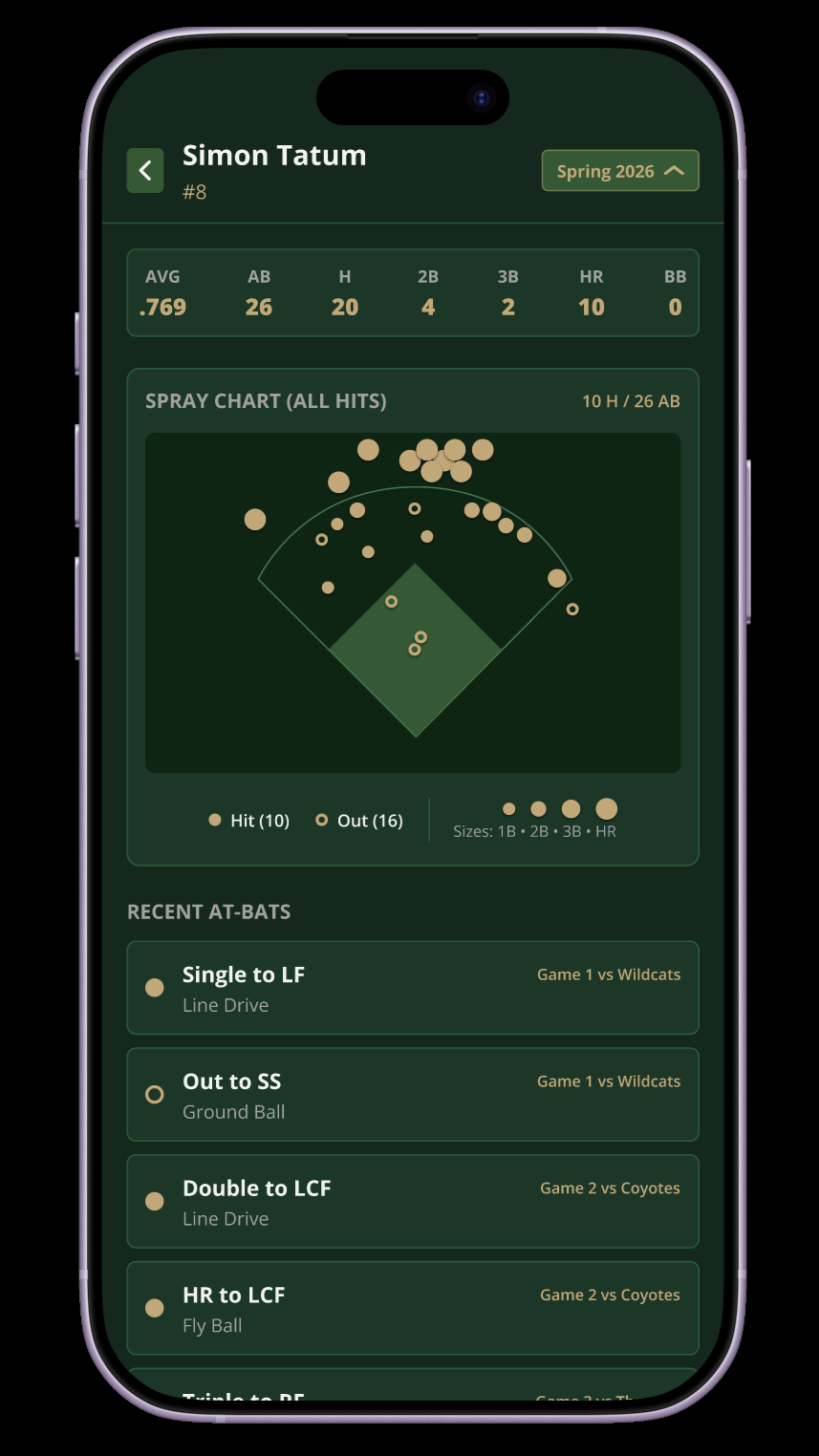
to recommend impactful lineup changes based on statistics
Users
(Who are our users?)
Scorekeepers
Players who are both playing and scorekeeping
User Needs
(What do they need?)
to accurately track game events in real time without getting overwhelmed by the amount of information to input
to quickly remedy any input mistakes
to understand analytics and suggestions made by the system
Design Process
Developing Concepts
All of my slow-pitch softball teams rely on a mix of group chats, spreadsheets, paper scorebooks, different apps, and memory to manage games. Players need to confirm availability, captains need to build lineups and positions, and someone has to accurately capture what happens during the game. This information is interconnects: a player’s RSVO affects the lineup, the lineup affects positions, and every play recorded during the game contributes to that player’s and the team’s statistics.
I’ve used several apps (i.e. BenchApp and Slug Stats) and they all had their pros and cons. I loved BenchApp’s RSVP feature for headcount and setting up the lineup, but there wasn’t a way to track statistics. I thought Slug Stats was a good app for being a free application on the Apple Store, but it was confusing trying to remedy any input mistakes or score based on different fielding configurations. I explored combining all my favorite design aspects of these systems into a single one-stop-shop for team management.
Outcomes
I started by thinking I was going to design a digital scorebook, but I ended up designing a system for turning real-world events into structured, usable data.
The Product
Rather than treating scorekeeping, roster management, and statistics as separate feature, I designed them as intertwined parts of the same system.
Key Design Challenges
I identified several challenges:
Building the Lineup
How do you build a lineup when availability is constantly changing?
Scoring in real time
Incorrect Data Input